- Reproduction: How Life Continues Class 9 Notes Overview
- Download Reproduction: How Life Continues Class 9 Science Notes PDF
- What is Reproduction and Why is it Important?
- Asexual Reproduction
- Budding in Yeast and Hydra
- Spore Formation in Fungi
- Role of Mitosis and Meiosis in Reproduction
- Sexual Reproduction in Flowering Plants
- Pollination and Its Types
- Fertilisation and Seed Formation in Plants
- Sexual Reproduction in Animals
- Reproduction in Human Beings
- Gametogenesis and Fertilisation in Humans
- Menstrual Cycle
- Pregnancy and Childbirth
- Reproductive Health and Responsible Decisions
- Important Scientific Terms and Definitions
- FAQs on Reproduction: How Life Continues Class 9 Science Notes
Reproduction: How Life Continues Class 9 Science Notes
By Karan singh ildefaultfield
|
Updated on 17 Nov 2026, 12:15 IST
Reproduction: How Life Continues Class 9 Science Notes help students understand how plants, animals, and human beings produce new individuals. Reproduction is an important biological process that ensures the continuity of life on Earth. NCERT Class 9 Science Chapter 11 textbook Exploration explains asexual reproduction, sexual reproduction, pollination, fertilisation, and human reproduction in simple terms.
These notes include an easy chapter summary, important definitions, comparison tables, diagrams to practise, and questions with answers. Students can use these Class 9 Science Notes for quick revision, homework, and preparation for school examinations.
Reproduction: How Life Continues Class 9 Notes Overview
Reproduction: How Life Continues is NCERT Class 9 Science textbook Chapter 11 Exploration. It explains the different ways living organisms reproduce and why reproduction is important for the survival of species.
| Particulars | Details |
| Chapter Name | Reproduction: How Life Continues |
| Class | 9 |
| Subject | Science |
| Textbook | Exploration |
| Chapter Number | 11 |
| Academic Session | 2026-27 |
| Main Topics | Asexual Reproduction, Sexual Reproduction, Pollination, Fertilisation, Human Reproduction |
| Important Concepts | Mitosis, Meiosis, Vegetative Propagation, Gametes, Zygote |
| Main Learning Objective | Understanding how living organisms reproduce and pass genetic information to the next generation |
Students should also refer to NCERT Books Class 9 to read the full chapter, study labelled diagrams, and complete the textbook activities.
Download Reproduction: How Life Continues Class 9 Science Notes PDF
Students can download Reproduction: How Life Continues Class 9 Science Notes PDF for quick revision and exam preparation. These notes are based on NCERT Exploration textbook class 9 Chapter 11 and cover asexual reproduction, sexual reproduction, pollination, fertilisation, and human reproduction. The PDF notes help students understand important concepts, revise key definitions, and prepare confidently for their Class 9 Science exams.
What is Reproduction and Why is it Important?
Reproduction is the biological process by which living organisms produce new individuals of their own species. Every living organism has a life span. It is born, grows, becomes mature, and eventually dies. Reproduction allows new individuals to replace older generations.
Loading PDF...
Examples of reproduction include:
- A mango tree produces seeds that grow into new mango plants.
- A cow gives birth to a calf.
- A dog gives birth to puppies.
- Yeast produces new cells through budding.
- Humans produce children through sexual reproduction.
Importance of Reproduction
- Continuity of Life: Reproduction ensures that species continue to exist.
- Transfer of Genetic Information: Offspring inherit genetic information from their parents.
- Population Maintenance: New individuals replace organisms that die.
- Genetic Variation: Sexual reproduction produces differences among offspring.
- Adaptation: Variation may help some organisms survive changing environmental conditions.
Types of Reproduction
| Asexual Reproduction | Sexual Reproduction |
| Usually involves one parent. | Involves genetic contributions from two parents. |
| Offspring are genetically identical or nearly identical to the parent. | Offspring inherit a mixture of characteristics from both parents. |
| Commonly involves mitosis. | Involves meiosis for gamete formation and fertilisation. |
| Produces very little genetic variation. | Produces genetic variation. |
| Examples: Budding in yeast and hydra; vegetative propagation. | Examples: Flowering plants, humans, birds, and most other animals. |
Important: Sexual reproduction creates variation, which helps populations adapt to changing environments.
Asexual Reproduction
Asexual reproduction is a method in which a single parent produces new individuals without the fusion of male and female gametes. It is found in organisms such as bacteria, amoeba, yeast, hydra, sponges, and many plants.
Vegetative Propagation in Plants
Vegetative propagation is a type of asexual reproduction in which new plants grow from vegetative parts such as stems, roots, or leaves.

| Plant | Part Used for Propagation |
| Potato | Underground stem |
| Ginger | Underground stem |
| Money Plant | Stem cutting |
| Sugarcane | Stem cutting |
| Bryophyllum | Leaves that produce plantlets |
Important Methods of Vegetative Propagation
1. Cutting
Best Courses for You

JEE

NEET

Foundation JEE

Foundation NEET

CBSE
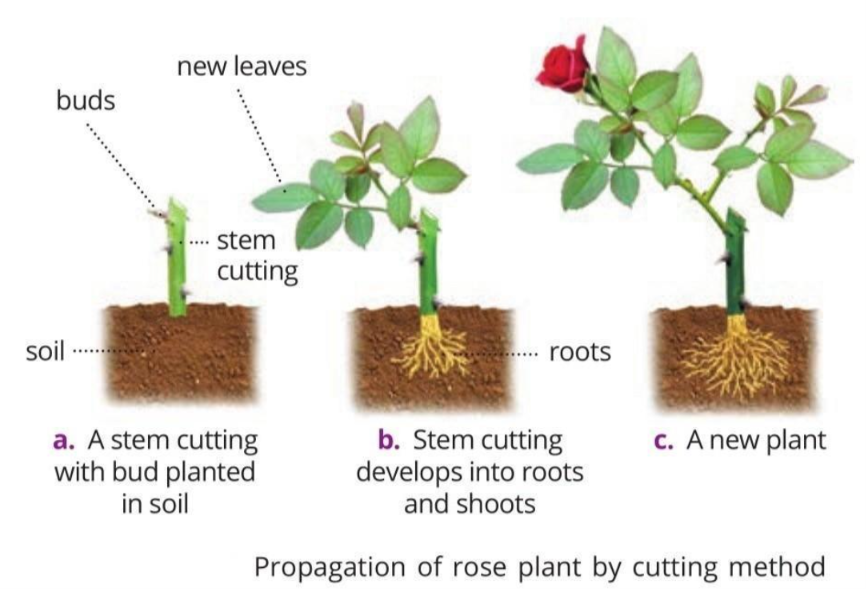
A piece of a plant's stem is cut and planted in suitable soil. It develops roots and grows into a new plant. Example: Rose or money plant.
2. Grafting
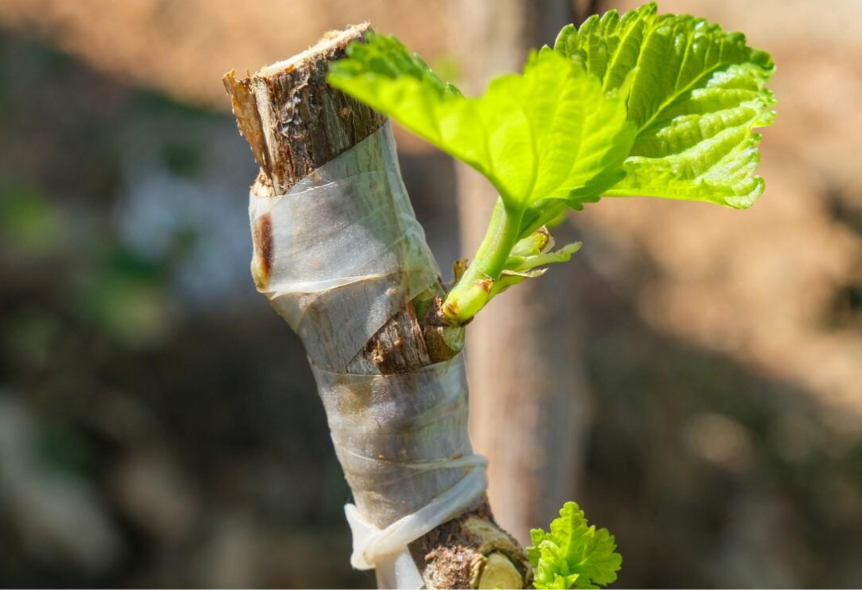
A healthy stem cutting from one plant is joined to a rooted plant of another suitable variety. The joined parts grow together. Example: Different varieties of roses.
3. Layering
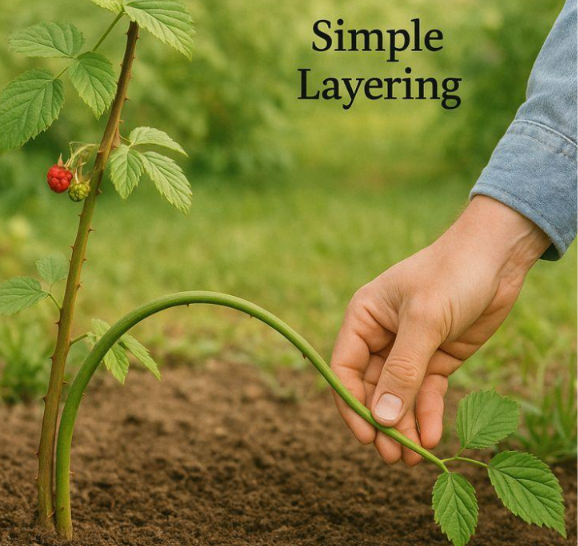
A flexible branch is bent and partly buried in the soil while still attached to the parent plant. Once roots develop, it is separated. Example: Lemon plant.
4. Tissue Culture
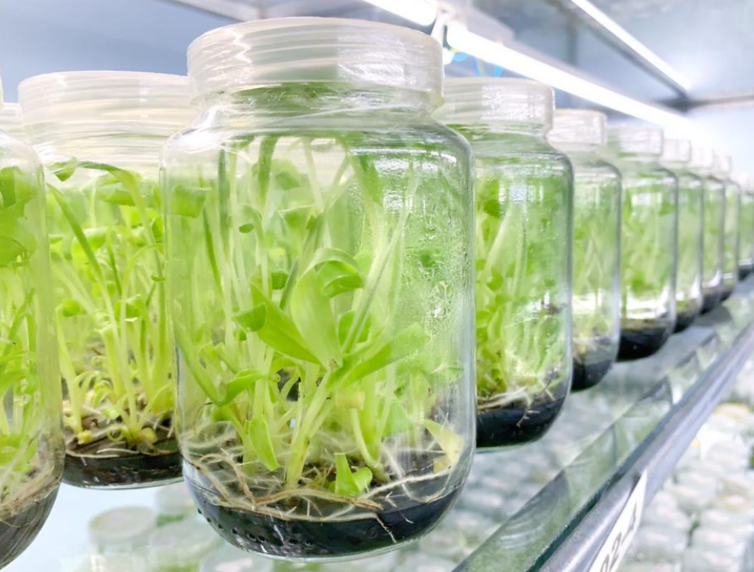
Small pieces of plant tissue are grown under controlled conditions to produce many healthy plantlets. Example: Large-scale banana plant production.
Importance of Vegetative Propagation in Agriculture
- Produces many plants with desirable characteristics.
- Helps farmers grow uniform crops on a large scale.
- Can produce planting material without relying on seeds.
- Tissue culture helps produce healthy plantlets.
- Supports agricultural and horticultural productivity.
Limitation: Because vegetatively propagated plants are genetically similar, they may share vulnerability to the same diseases or environmental changes.
Budding in Yeast and Hydra
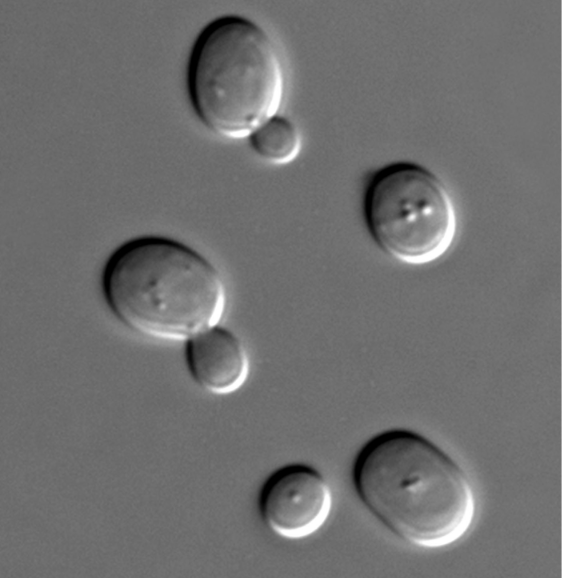
Budding is a type of asexual reproduction in which a small outgrowth, called a bud, develops on the parent organism.
Yeast
A small bud grows on the parent yeast cell. It develops into a new yeast cell.
Hydra
Repeated cell division produces a bud on the body. The bud grows and eventually separates to live independently.
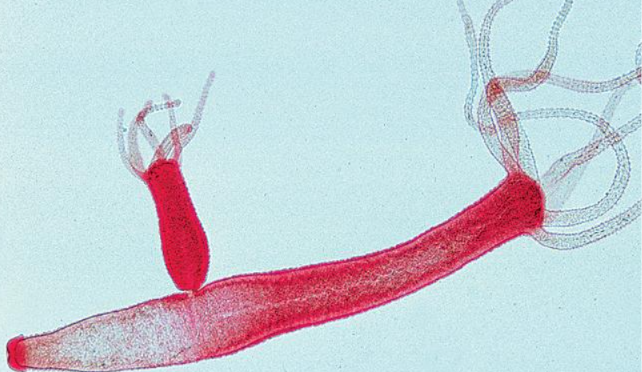
Important difference: Yeast is unicellular, whereas hydra is a multicellular animal. Both can reproduce by budding.
Spore Formation in Fungi
Some fungi, such as Rhizopus and Aspergillus, reproduce by producing spores. Spores are tiny, lightweight reproductive structures that can spread through air currents.
How Spore Formation Occurs
- Fungi produce large numbers of spores.
- The spores spread through air.
- Spores land on a suitable surface, such as moist bread.
- In warm, moist conditions, they germinate.
- New fungal growth develops.
Key fact from the textbook: The bread mould activity uses a warm environment of approximately 25-35°C, because warmth and moisture help mould spores grow. The chapter also explains that fungi help decompose organic waste and that some fungi are important in producing antibiotics.
Role of Mitosis and Meiosis in Reproduction
Both mitosis and meiosis are types of cell division, but they serve different purposes.
| Mitosis | Meiosis |
| Maintains the chromosome number in daughter cells. | Reduces the chromosome number by half during gamete formation. |
| Produces genetically identical daughter cells in the chapter's basic model. | Creates different combinations of genetic information. |
| Important for growth and asexual reproduction. | Important for sexual reproduction. |
Chromosomes in Human Beings
46
Chromosomes in a typical body cell
23
Chromosomes in a sperm or egg
46
Chromosomes in the zygote
During fertilisation, the sperm and egg combine, restoring the normal chromosome number in the zygote.
Why is Variation Important?
Variation means differences in characteristics between individuals of the same species. Sexual reproduction creates variation because offspring inherit different combinations of genetic information from their parents. Variation can help some organisms survive environmental changes and contributes to evolution over many generations.
Sexual Reproduction in Flowering Plants
Flowers are the reproductive organs of flowering plants, also called angiosperms. A complete flower has four main parts.
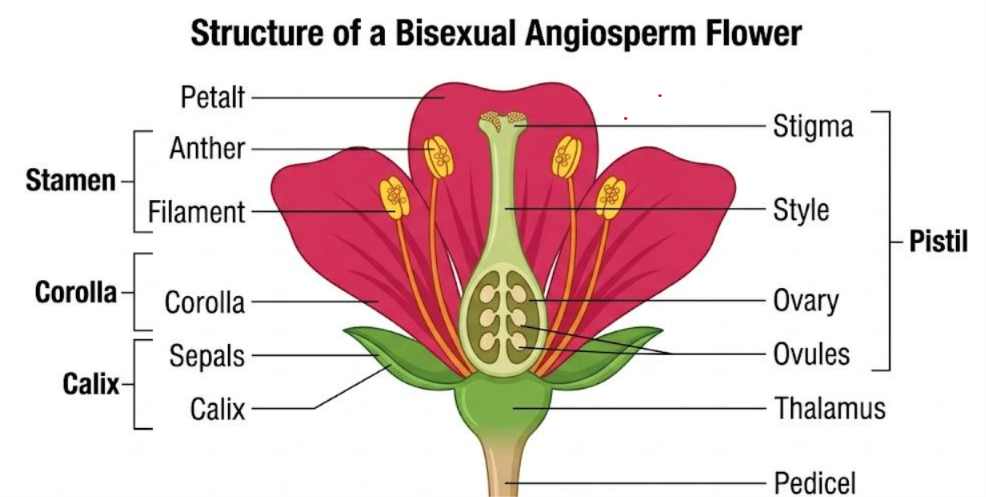
| Flower Part | Function |
| Sepal | Protects the flower in the bud stage. |
| Petal | Often attracts pollinators through colour or fragrance. |
| Stamen | Male reproductive part of the flower. |
| Pistil | Female reproductive part of the flower. |
| Anther | Produces pollen grains containing male gametes. |
| Filament | Supports the anther. |
| Stigma | Receives pollen grains. |
| Style | Connects the stigma to the ovary. |
| Ovary | Contains ovules and develops into a fruit after fertilisation. |
| Ovule | Contains an egg cell and develops into a seed after fertilisation. |
Remember: The stamen consists of anther and filament, while the pistil consists of stigma, style, and ovary.
Pollination and Its Types
Pollination is the transfer of pollen grains from the anther to the stigma of a flower.
Difference Between Self-Pollination and Cross-Pollination
| Self-Pollination | Cross-Pollination |
| Pollen reaches the stigma of the same flower or another flower on the same plant. | Pollen is transferred to a flower on a different plant of the same type. |
| Usually produces less genetic variation. | Can produce more genetic variation. |
| Does not require pollen transfer between different plants. | Requires pollen to move between plants. |
Agents of Pollination
| Pollinating Agent | Plant Examples | Important Adaptations |
| Wind | Wheat, maize, rice | Light pollen produced in large numbers; feathery stigmas. |
| Water | Vallisneria, Hydrilla | Water currents carry pollen. |
| Insects | Sunflower, hibiscus, marigold | Bright petals, fragrance, nectar, and sticky pollen. |
| Birds | Coral tree, hibiscus | Flowers attract birds such as sunbirds. |
Pollination Efficiency
| Pollination Strategy | Approximate Pollen Grains Per Flower | Estimated Average Seeds Formed |
| Wind-pollinated grasses | 5,00,000 - 10,00,000 | 50 - 200 |
| Insect-pollinated plants | 20,000 - 40,000 | 800 - 1,000 |
These are approximate example figures from the chapter, not universal values for all plants.
Note: Wind-pollinated plants may produce many pollen grains because much pollen is lost during transfer. Insect pollination can be more targeted.
Fertilisation and Seed Formation in Plants
Fertilisation is the fusion of male and female gametes to form a zygote.
- Pollination: Pollen reaches a compatible stigma.
- Pollen Germination: A pollen tube grows through the style.
- Fertilisation: The male gamete reaches the ovule and fuses with the egg.
- Zygote Formation: The fertilised egg develops into an embryo.
- Fruit and Seed Formation: The ovary develops into a fruit, while the ovules develop into seeds.
- Germination: Under suitable conditions, seeds grow into new plants.
Important difference: Pollination is the transfer of pollen, whereas fertilisation is the fusion of gametes.
Sexual Reproduction in Animals
Animals reproduce through different reproductive strategies.
External and Internal Fertilisation
| External Fertilisation | Internal Fertilisation |
| Fusion of gametes occurs outside the female body. | Fusion of gametes occurs inside the female body. |
| Common in frogs and many fish. | Found in reptiles, birds, and mammals. |
| Often involves large numbers of eggs. | Fertilised eggs or embryos are generally better protected. |
| Survival of young ones is often lower. | Survival chances are generally higher. |
Variation in Animal Reproduction
The textbook provides the following illustrative figures.
| Animal | Fertilisation | Approximate Number of Eggs | Estimated Survival |
| Fish | External | Hundreds to thousands | Low |
| Frog | External | 5,000–50,000 | Low |
| Lizard | Internal | 2–20 | Moderate |
| Bird | Internal | 1–15 | Moderate to high |
Metamorphosis
Metamorphosis is a major change in body form during an animal's development.
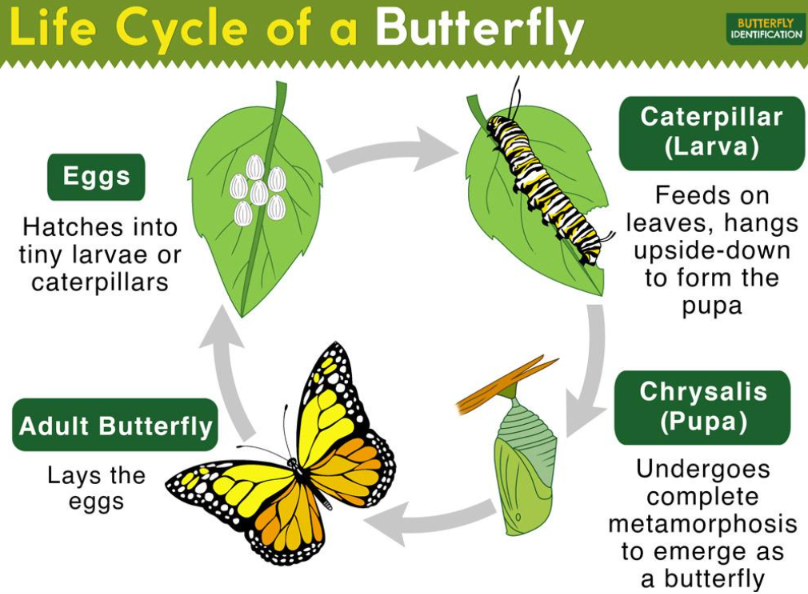
A butterfly passes through the stages:
Egg → Larva (caterpillar) → Pupa → Adult butterfly
The larval stage is mainly a feeding and growth stage. Frogs also undergo major changes during development.
Reproduction in Human Beings
Human reproduction takes place through sexual reproduction. The male reproductive system produces sperm, while the female reproductive system produces eggs. When a sperm fuses with an egg, a zygote is formed. The zygote develops into an embryo and later into a foetus.
Male Reproductive System
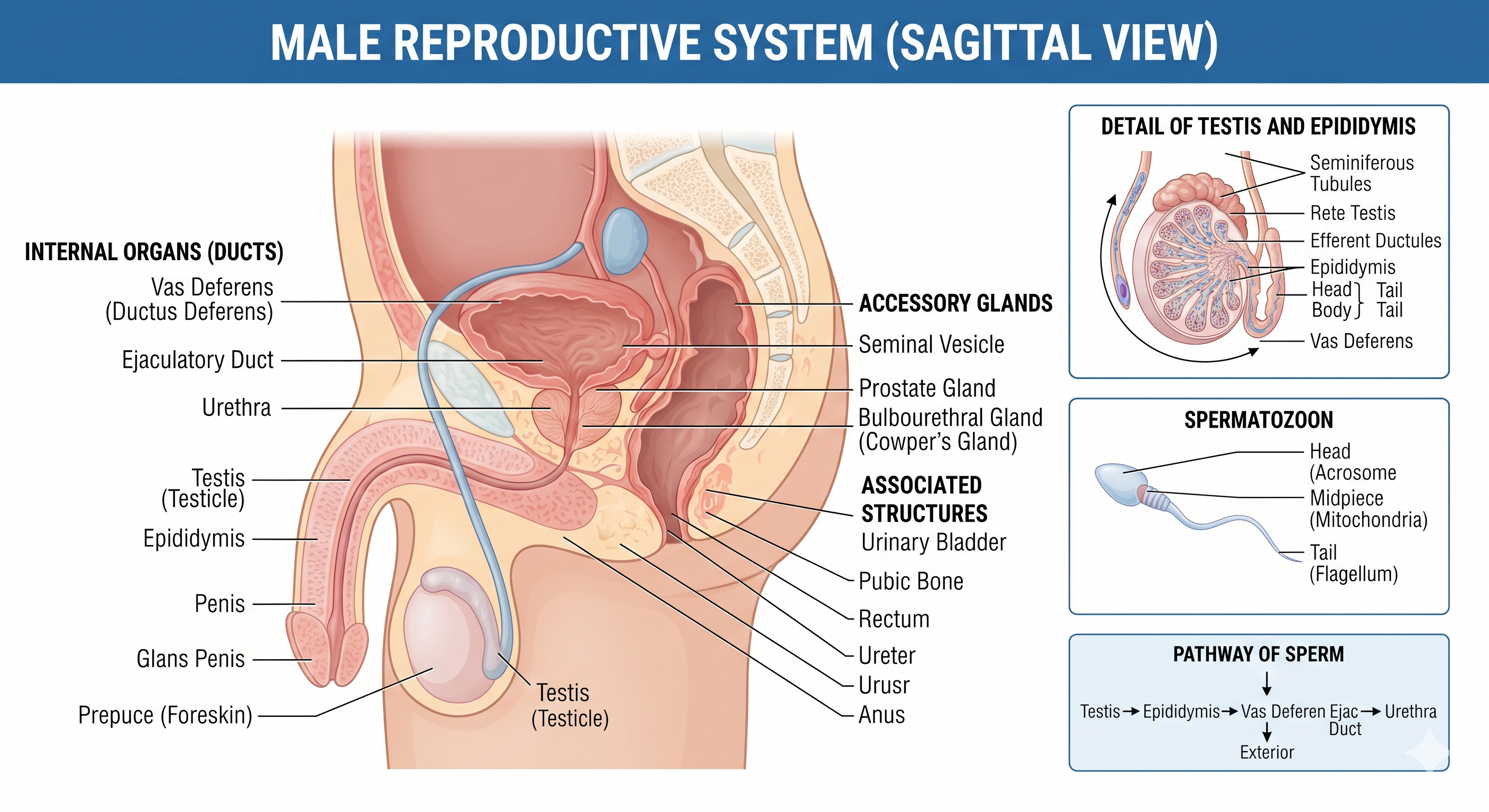
| Organ | Function |
| Testes | Produce sperm and male reproductive hormones. |
| Scrotum | Holds the testes at a temperature slightly below normal body temperature. |
| Vas Deferens | Carries sperm from the testes towards the urethra. |
| Seminal Vesicles | Add fluid that helps nourish sperm. |
| Prostate Gland | Produces fluid that supports sperm movement. |
| Urethra | Passage through which semen or urine leaves the body. |
| Penis | Helps transfer sperm into the female reproductive tract. |
Important point: The scrotum helps maintain a suitable temperature for sperm production.
Female Reproductive System
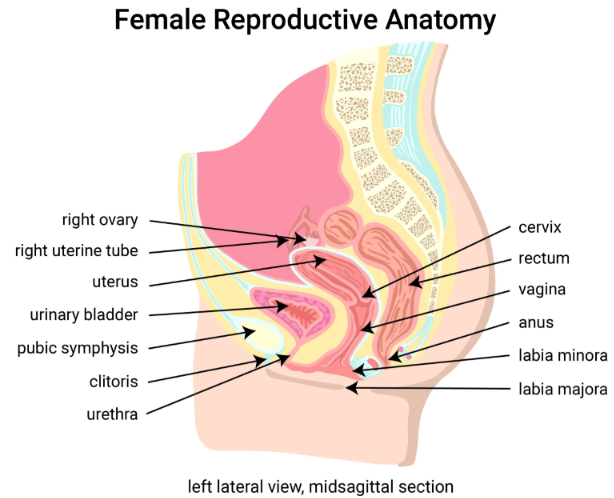
| Organ | Function |
| Ovaries | Produce eggs and female reproductive hormones. |
| Oviducts (Fallopian Tubes) | Carry the egg towards the uterus and are the usual site of fertilisation. |
| Uterus | Supports the development of the embryo and foetus. |
| Cervix | Narrow passage between the uterus and vagina. |
| Vagina | Receives sperm and serves as part of the birth canal. |
Gametogenesis and Fertilisation in Humans
Gametogenesis is the process of forming reproductive cells, or gametes, through meiosis.
| Feature | Sperm | Egg |
| Size | Very small | Large |
| Number Produced | Millions | Few |
| Stored Nutrients | Absent | Present |
| Movement | Actively motile | Non-motile |
| Chromosomes | 23 | 23 |
What Happens During Human Fertilisation?
- An ovary releases a mature egg. This is called ovulation.
- The egg enters the oviduct.
- If sperm reaches the egg and fuses with it, fertilisation occurs.
- A zygote containing 46 chromosomes is formed.
- The zygote undergoes repeated cell divisions as it moves towards the uterus.
- The developing structure attaches to the uterine lining through implantation, marking the beginning of pregnancy.
Menstrual Cycle
Menstruation is the shedding of the thickened uterine lining, along with some blood, when pregnancy does not occur.
According to the chapter, a menstrual cycle typically lasts 21–35 days, often around 28 days. Menstrual bleeding usually lasts 3–7 days.
Stages of a Typical 28-Day Menstrual Cycle
DAYS 1-5
Menstruation
The uterine lining is shed.
DAYS 6-14
Preparation
The uterine lining rebuilds and an egg matures.
AROUND DAY 14
Ovulation
An ovary releases a mature egg in the textbook's typical example.
DAYS 15-28
Further Preparation
The uterine lining becomes thicker. If pregnancy does not occur, the cycle repeats.
Note: Ovulation does not always happen on Day 14. The actual day can vary because menstrual cycle lengths differ.
Menstrual Hygiene
The textbook recommends using clean menstrual products, washing hands before and after changing products, changing them regularly, and disposing of used products responsibly. It also explains that menstruation is a natural biological process and should not be a cause of shame.
Pregnancy and Childbirth
Human pregnancy lasts approximately nine months and is divided into three trimesters.
| Trimester | Important Development |
| First Trimester | The embryo develops, and major organs begin to form. From approximately the ninth week, it is called a foetus. |
| Second Trimester | The foetus grows bigger and stronger, and movements can usually be felt. |
| Third Trimester | The baby grows rapidly and prepares for birth. |
Important Notes on Maternal and Newborn Care
- A balanced diet containing proteins, vitamins, and minerals supports maternal health.
- Regular medical check-ups are important during pregnancy.
- Adequate rest and emotional support help the mother.
- Newborn babies require warmth, timely vaccinations, and careful handling.
- Breast milk provides nutrition and helps protect infants from diseases.
- The textbook also discusses postpartum depression and the importance of seeking professional support when needed.
Reproductive Health and Responsible Decisions
The chapter explains that physical reproductive maturity and emotional maturity are not the same. The body may become capable of reproduction during adolescence, but responsible decision-making develops over time.
Sexually Transmitted Infections (STIs)
STIs are infections that can spread through sexual contact. The textbook mentions gonorrhoea, syphilis, herpes, genital warts, and HIV.
Methods of Contraception
| Method | Function |
| Condoms | Act as a barrier to reduce the risk of pregnancy and transmission of STIs. |
| Oral Contraceptive Pills | Use hormones or other mechanisms to help prevent pregnancy, depending on the medicine. |
| Intra-Uterine Devices (IUDs) | Devices such as Copper-T are placed inside the uterus to prevent pregnancy. |
| Surgical Methods | Block the vas deferens or fallopian tubes to prevent sperm and egg from meeting. |
Important distinction: Contraceptive pills and IUDs do not protect against sexually transmitted infections. Condoms can reduce the risk of both pregnancy and many STIs.
Important Scientific Terms and Definitions
| Term | Definition |
| Reproduction | Production of new individuals of the same kind. |
| Asexual Reproduction | Reproduction involving one parent without gamete fusion. |
| Sexual Reproduction | Reproduction involving the fusion of male and female gametes. |
| Vegetative Propagation | Formation of new plants from vegetative parts. |
| Budding | Formation of a new individual from an outgrowth on a parent. |
| Spore Formation | Reproduction through tiny reproductive structures called spores. |
| Mitosis | Cell division that maintains chromosome number. |
| Meiosis | Cell division that reduces chromosome number by half to form gametes. |
| Gamete | A reproductive cell such as sperm or egg. |
| Pollination | Transfer of pollen grains from anther to stigma. |
| Fertilisation | Fusion of male and female gametes. |
| Zygote | Cell formed after fertilisation. |
| Embryo | Early developing stage of a new organism. |
| Ovulation | Release of a mature egg from an ovary. |
| Menstruation | Shedding of the uterine lining when pregnancy does not occur. |
| Implantation | Attachment of the developing embryo to the uterine lining. |
| Metamorphosis | Major change in body form during development. |
course
No courses found
FAQs on Reproduction: How Life Continues Class 9 Science Notes
What is reproduction in Class 9 Science?
Reproduction is the biological process by which living organisms produce new individuals of their own kind. It ensures that life continues and genetic information passes from parents to offspring.
What are the two main types of reproduction?
The two main types are asexual reproduction and sexual reproduction. Asexual reproduction usually involves one parent, while sexual reproduction involves the fusion of male and female gametes.
What is the difference between asexual and sexual reproduction?
Asexual reproduction generally produces genetically identical offspring without gamete fusion. Sexual reproduction combines genetic information from two parents and produces variation among offspring.
Why is meiosis important in sexual reproduction?
Meiosis produces gametes with half the normal chromosome number. It also creates different combinations of genetic information, helping produce variation among offspring.
What is vegetative propagation? Give examples.
Vegetative propagation is a type of asexual reproduction in which new plants develop from stems, roots, or leaves. Examples include potato, ginger, sugarcane, money plant, and Bryophyllum.
What is the difference between pollination and fertilisation?
Pollination is the transfer of pollen grains from the anther to the stigma. Fertilisation is the fusion of male and female gametes to form a zygote.
What is the difference between internal and external fertilisation?
Internal fertilisation takes place inside the female reproductive tract, as in birds and mammals. External fertilisation takes place outside the body, usually in water, as in frogs and many fish.
How many chromosomes are present in human reproductive cells?
Human sperm and egg cells normally contain 23 chromosomes each. During fertilisation, they combine to form a zygote with 46 chromosomes.
Where can students find Reproduction How Life Continues Class 9 notes?
Students can use these chapter-wise notes and refer to Infinity Learn Class 9 Science Notes and NCERT Solutions Class 9 Science resources for additional study material and exam preparation.
