













Courses

By rohit.pandey1
|
Updated on 16 Jun 2026, 11:23 IST
A growing list of unfinished chapters can make JEE preparation feel impossible. You may be attending school or coaching every day, trying to understand the current syllabus, completing assignments, and simultaneously worrying about Class 11 chapters you barely remember. Every new lecture adds more work, while old topics continue to occupy space in your mind.
You are not alone. With an estimates commonly suggest that 70–80% of JEE aspirants enter Class 12 with at least some Class 11 backlog. Droppers face a similar problem: they may have studied most chapters once, but large portions remain weak, unpractised, or forgotten.
The solution is not another unrealistic video claiming that you can “finish the entire JEE syllabus in 15 days.” A backlog built over several months cannot be repaired properly through rushed lectures, random question-solving, and four hours of sleep.
What you need is a realistic 30-day plan to clear JEE backlogs while continuing your current syllabus.
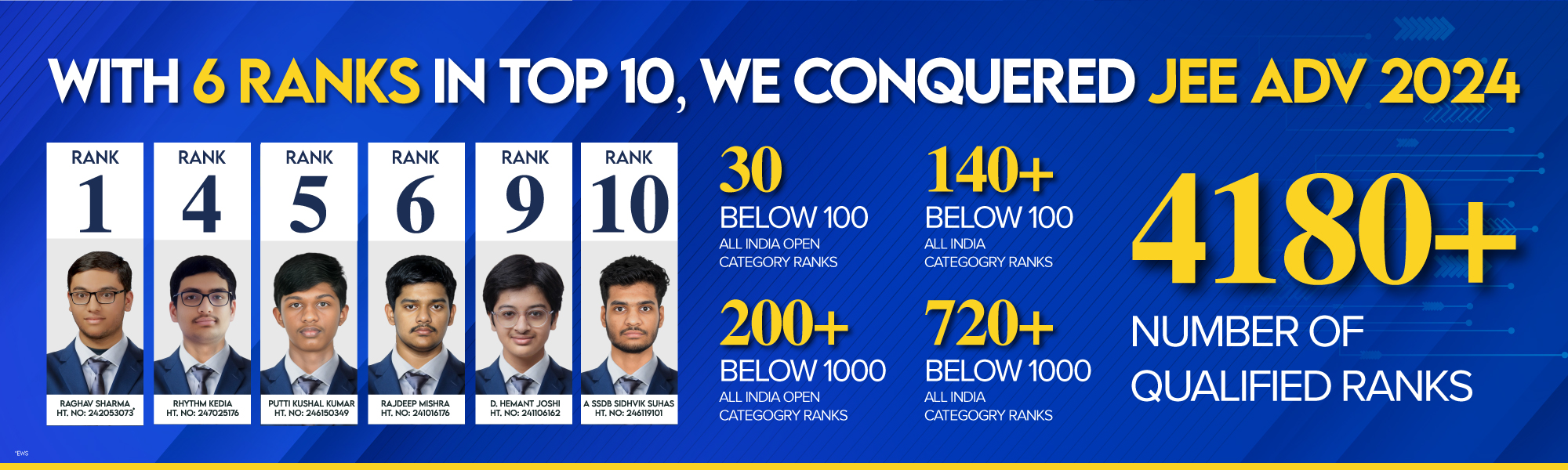
Infinity Learn has supported four students who achieved Top 10 ranks in IIT JEE in recent years. One pattern consistently appears in the preparation journeys of strong rankers: they do not try to study everything at once. They identify the highest-impact gaps, allocate time deliberately, practise immediately, and protect their ongoing syllabus from becoming the next backlog.
This guide gives you a practical four-week system:
You may not finish every pending chapter in 30 days—and that is not the goal. The goal is to convert an overwhelming backlog into a controlled, prioritised, test-ready syllabus without creating new backlogs or burning yourself out.
Before creating a timetable, you must correct the thinking that caused the backlog to become overwhelming.

Many students ignore backlogs for weeks and then suddenly attempt 12–14 hours of self-study for three days. They become exhausted, miss current lectures, and return to the same position.
A sustainable JEE backlog plan depends on repeatable daily effort, not occasional extreme effort.

JEE

NEET

Foundation JEE

Foundation NEET

CBSE
Studying a backlog topic for two focused hours every day gives you roughly 60 hours in a month. Used correctly, those 60 hours can repair several important chapters.
Your current syllabus must remain the priority.
Use one of these two ratios:
| Student situation | Current syllabus | Backlog |
| Current topics are already unstable | 70% | 30% |
| Current syllabus is under control | 60% | 40% |
| School or coaching test is approaching | 75–80% | 20–25% |
| Vacation or low-class-load period | 50–60% | 40–50% |
For most students, the 60:40 rule works well. For example, if you have six hours of effective self-study, spend approximately 3.5–4 hours on current work and 2–2.5 hours on backlogs.
Never reverse the ratio for long periods. Clearing old chapters while missing current lectures simply moves the backlog forward.
Watching a six-hour one-shot does not mean you have completed a chapter.
A chapter should be considered “recovered” only when you can:
Quality is more valuable than the number of lectures watched.
High-ranking students are rarely backlog-free throughout their entire preparation. Their advantage is that they respond quickly.
They typically:
Their strategy is not “study everything.” It is study the right material in the right order.
Do not begin by randomly selecting your favourite chapter.
The first two days of this plan are for building a complete, honest backlog audit.
Write every pending chapter under Physics, Chemistry, and Mathematics. Then divide each chapter into subtopics.
For example, do not write only:
Write:
This prevents you from wasting time rewatching an entire chapter when only two subtopics are weak.
Use the following four labels:
A revision backlog may require two hours. A completely untouched chapter may require eight or more. Treating both equally produces a bad plan.
| Subject | Chapter or subtopic | Status | Prerequisite required | Estimated hours | Importance | Immediate action |
| Physics | Current Electricity | B | Basic electrostatics | 5 | High | Short revision + DPPs |
| Physics | Rotational Motion | A | NLM, WPE | 10 | Medium-high | Postpone until prerequisites |
| Chemistry | Chemical Bonding | C | Periodic trends | 4 | Very high | Repair weak subtopics |
| Chemistry | Coordination Compounds | A | Chemical bonding | 6 | High | One-shot + NCERT + PYQs |
| Mathematics | Limits | C | Functions, algebra | 4 | Very high | Concept repair + practice |
| Mathematics | Vectors | B | Basic algebra | 3 | High | Formula review + PYQs |
Not every chapter belongs in this month’s schedule.
Temporarily postpone a chapter when:
Postponement is not surrender. It is prioritisation.
The best answer to “how to cover backlogs for JEE” is not “start from Chapter 1.” Your order should depend on three factors:
How frequently does the chapter contribute to JEE Main or Advanced-style problems? Is it regularly tested in your coaching?
Does the chapter support several future topics?
For example:
How long will it take to make the chapter usable?
A chapter with good exam value that can be revised in four hours may be a better first choice than a difficult chapter requiring twelve hours.
Assign each topic a score from 1 to 5 for:
Then subtract its difficulty or time cost.
Priority Score = Weightage + Dependency + Urgency + Familiarity − Time Cost
You do not need perfect mathematics. The score exists to prevent emotional decision-making.
Actual question distribution varies across papers and years, so use this as a strategic summary rather than a guaranteed marks chart.
| Physics | Chemistry | Mathematics |
| Modern Physics | Chemical Bonding | Functions |
| Current Electricity | Coordination Compounds | Limits and Continuity |
| Electrostatics | Thermodynamics | Differentiation |
| Ray Optics | Equilibrium | Application of Derivatives |
| Semiconductor Electronics | Electrochemistry | Matrices and Determinants |
| Thermodynamics | Chemical Kinetics | Vectors and 3D Geometry |
| Units, Dimensions and Errors | Mole Concept | Sequence and Series |
| Magnetism and EMI | GOC and Isomerism | Probability |
| Work, Power and Energy | Hydrocarbons | Straight Lines and Circles |
Each week, select:
Example:
This combination produces visible progress while strengthening your long-term preparation.
Your target is not “100% syllabus completion.” Your target is to make a selected portion exam-usable.
Stop the backlog from growing and recover manageable chapters.
Complete the audit described above. Select:
Do not schedule all of them immediately. Your Week 1 targets should mainly be B, C, or D category chapters.
Use short notes, selected lecture segments, examples, and basic-to-moderate questions.
A good recovery cycle is:
Take a 60–90 minute mixed test covering the recovered topics.
Use the remaining time to:
By the end of Week 1, you should have:
Work on chapters that influence several other topics.
Choose one major focus area per subject. Examples include:
Do not automatically watch the full lecture.
First attempt a diagnostic set of 10–15 basic questions. Use your mistakes to identify exactly what requires revision.
Then cover only the required sections through:
Use three levels:
You do not need hundreds of questions. A carefully reviewed set of 40–60 relevant questions can be more useful than 150 rushed attempts.
Take one subject-wise test or three shorter chapter tests.
Analyse:
A guessed answer is not proof of mastery.
You should now have:
Convert recovered theory into usable exam performance.
At this stage, many students make the mistake of beginning more lectures. Instead, reduce passive learning and increase practice.
Combine related chapters.
Examples:
Mixed practice teaches you to identify which concept a question requires. That skill is essential in tests.
Attempt recent and representative previous-year questions under time limits.
After each set, classify questions:
Reattempt the last three categories after reviewing the concept.
Take a timed paper containing:
This checks whether backlog work is actually integrating with your main preparation.
By now, you should be able to:
Prevent recovered chapters from becoming backlogs again.
Review your test analysis and select only the most important unresolved gaps.
Do not restart complete chapters. Repair individual issues such as:
Take chapter tests, subject tests, or a part-syllabus mock.
Use realistic time pressure. A chapter understood only in untimed practice is not fully ready.
For every incorrect or skipped question, write:
Reattempt marked questions without looking at the solution. Revise formula sheets, reaction maps, NCERT highlights, and your error notebook.
Divide the backlog into:
A successful month does not mean every cell says “cleared.” It means you now know exactly where you stand and what to do next.
| Week | Primary focus | Expected output | Buffer or test |
| Week 1 | Audit and quick wins | Inventory + smaller chapters recovered | Day 7 |
| Week 2 | Conceptual repair | High-impact chapters at basic/moderate level | Day 14 |
| Week 3 | Mixed practice and PYQs | Better application and speed | Day 21 |
| Week 4 | Testing and consolidation | Stable chapters + next-month plan | Days 28–30 |
This timetable includes school or coaching time. It does not recommend 10–12 hours of daily self-study.
| Time | Activity | Category |
| 6:00–6:45 a.m. | Formula, reaction, or short-note revision | Backlog recall |
| 7:00–8:00 a.m. | Current syllabus questions or homework | Current |
| 8:30 a.m.–2:30 p.m. | School or coaching, including breaks | Current learning |
| 3:00–4:00 p.m. | Lunch and rest | Recovery |
| 4:00–5:30 p.m. | Same-day lecture revision and DPP | Current |
| 5:30–6:00 p.m. | Break or light activity | Recovery |
| 6:00–7:30 p.m. | Backlog concept block | Backlog |
| 7:30–8:15 p.m. | Dinner and reset | Recovery |
| 8:15–9:30 p.m. | Backlog questions or PYQs | Backlog |
| 9:30–10:15 p.m. | Current assignment or revision | Current |
| 10:15–10:30 p.m. | Plan tomorrow and update tracker | Planning |
For students with longer school hours, use one 90-minute backlog block on weekdays and longer blocks on weekends. The ratio matters more than copying exact timings.
Physics: Spend less time collecting formulas and more time understanding situations, diagrams, assumptions, and units.
Chemistry: Use NCERT actively for Inorganic and selected Organic facts. Combine Physical Chemistry theory with immediate numerical practice.
Mathematics: Avoid long passive lectures. Solve with a pen in hand. Maintain a sheet of methods, substitutions, identities, and recurring question patterns.
The Mirror Technique means comparing what you planned with what you actually completed.
At the end of each day, create two columns:
| Planned | Actually completed |
| Limits theory + 25 questions | Theory + 14 questions |
| Current Electricity DPP | Not attempted |
| Current lecture revision | Completed |
Then ask:
The purpose is not guilt. It is calibration.
Parkinson’s Law suggests that work expands to fill the time available.
Do not write “study Thermodynamics tonight.” Give the task a boundary:
Use strict but realistic time blocks. When the timer ends, record what remains instead of letting one topic consume the entire evening.
Break each chapter into units small enough to finish in one session.
For Current Electricity:
Small units reduce resistance and make progress measurable.
Close your notes and write:
Anything you cannot recall becomes tomorrow’s revision target.
Explain the concept in simple language, as though teaching a younger student.
For example: “Why does equivalent resistance decrease in a parallel combination?”
When your explanation becomes vague, you have found a conceptual gap.
A one-shot video is useful only when used deliberately.
Follow this sequence:
Do not create a playlist backlog while trying to clear an academic backlog.
Using too many books, channels, PDFs, and modules slows you down. Build a compact resource system.
Use short notes for:
Good short notes should help you revise a chapter in 15–30 minutes.
Use one-shots for:
Prefer full-length lectures when the foundation is absent or the chapter is strongly prerequisite-dependent.
Daily Practice Problems help convert recent learning into retention.
A strong DPP should include:
Our platform’s chapter-wise DPPs, short notes, one-shot videos, and test series are designed to support this exact workflow: learn selectively, practise immediately, test honestly, and revise from errors.
Chemistry: NCERT is essential, especially for Inorganic Chemistry and several factual portions of Organic and Physical Chemistry.
Physics and Mathematics: Use NCERT Solutions or basic material for clarity where required, but rely on coaching modules, curated sheets, DPPs, and PYQs for exam-level practice.
Do not jump directly to advanced problems when basic accuracy is weak. Use the progression:
Concept clarity → standard questions → PYQs → selected advanced problems
Explore our chapter-wise short notes, one-shot revision videos, DPPs, and JEE test series to build a single, structured backlog-recovery system instead of switching between disconnected resources.
Track only a few meaningful metrics:
| Metric | Daily target |
| Current syllabus revised the same day | Yes or no |
| Backlog focus time | 90–150 minutes |
| Quality questions attempted | Topic-dependent |
| Errors reviewed | Yes or no |
| Sleep | 7–8 hours where possible |
| Tomorrow’s first task decided | Yes or no |
Question count alone can be misleading. Ten well-analysed questions may produce more improvement than fifty rushed questions.
Every seventh day, answer:
During the first week, use chapter tests. By Weeks 3 and 4, introduce mixed or part-syllabus tests.
A useful test cycle is:
Attempt → analyse → revise → reattempt
A test without analysis is only a score-generating activity.
Reduce or modify backlog targets when:
The most sustainable way to finish JEE backlogs without burnout is to keep the plan demanding enough to create progress but flexible enough to survive school tests, coaching workload, illness, and difficult days.
Clearing a backlog is useful only when you stop creating new ones.
Revise each current lecture within 24 hours and complete its basic practice within 48 hours.
Mark every current chapter as:
Address yellow topics before they become red.
Even after the 30-day plan ends, reserve two or three weekly sessions for:
Maintain a doubt list and clear it during coaching, school, peer discussion, or a scheduled doubt session. Ten unresolved doubts can make an entire chapter feel weak.
On an extremely busy day, complete at least:
A smaller completed cycle is better than postponing everything.
Our experience supporting four students who achieved Top 10 JEE ranks has reinforced one important lesson: top performers are not successful because every phase of preparation is perfect. They succeed because they identify weaknesses early and respond systematically.
One high-performing student entered an important preparation phase with weak Class 11 Mechanics. Instead of pausing Class 12, the student reserved a fixed daily backlog block and repaired prerequisites in sequence—basic mathematics, vectors, Newton’s Laws, and Work, Power and Energy.
The immediate outcome was not “all of Mechanics completed in two weeks.” The meaningful outcome was that current Physics stopped feeling disconnected, test attempts became more confident, and the remaining backlog could be handled in a planned order.
Another top-rank-level student repeatedly revised familiar Chemistry chapters but avoided timed tests. Once the workflow changed to short-note revision, DPPs, chapter tests, and systematic reattempts, weak areas became visible.
The student stopped treating familiarity as mastery. This led to more stable accuracy, quicker revision, and better control over recurring errors.
The lesson is simple: rank improvement comes from closing specific gaps, not repeatedly consuming content.
To understand how to clear JEE backlogs fast, you must redefine “fast.”
Fast does not mean rushing through every lecture. It means avoiding wasted effort, selecting high-return chapters, repairing prerequisites, practising immediately, and testing your progress.
For the next 30 days:
You may finish the month with a few chapters still pending. That does not mean the plan failed.
If your important chapters are stronger, your current syllabus is stable, your test accuracy is improving, and your remaining backlog is organised, you have achieved something far more valuable than rushed syllabus completion: control over your JEE preparation.
No courses found
You can clear a carefully selected portion of your backlog in 30 days, especially chapters that are partially studied or require revision and practice. Clearing every pending chapter from zero may not be realistic. Focus on converting high-priority topics into test-ready chapters.
Most students should allocate 90–150 focused minutes daily to backlogs while continuing current studies. During holidays, this may increase. Total study hours matter less than consistent, distraction-free sessions followed by practice.
No. Never pause the current syllabus for an extended period. Use the 60:40 or 70:30 rule, with the larger share of time reserved for current topics.
Start with prerequisites and high-return chapters. Repair topics such as Basic Mathematics, Vectors, Newton’s Laws, Mole Concept, Chemical Bonding, Functions, and Trigonometric basics based on what is blocking your current syllabus.
Use one-shots for chapters you have studied before or partly remember. Choose detailed lectures when the foundation is absent, the chapter is highly conceptual, or several future topics depend on it.
There is no universal number. Begin with enough basic questions to confirm understanding, then solve standard questions, PYQs, and a timed chapter test. For many chapters, 40–80 carefully selected and analysed questions can create a strong recovery base.
Begin with the subject or chapter that is affecting your current syllabus most severely. Also consider exam value, dependencies, and recovery time. Do not spend the entire month on only your favourite subject.
Use a fixed weekday backlog block of 60–120 minutes, extend practice on weekends, and revise current lectures on the same day. Include school and coaching in your total academic workload rather than planning an unrealistic 10–12 hours of additional self-study.
Do not double the next day’s workload. Move unfinished work to the weekly buffer, reduce low-priority tasks, and identify why the target failed. Repeatedly postponed tasks should be divided into smaller units or replaced with a more realistic resource.
Yes. Droppers can use the same audit, priority matrix, weekly testing, and 60:40 framework. However, the “current syllabus” portion may include the active revision schedule, test-series syllabus, or chapters currently being taught in a dropper batch.