
Table of Contents
The full form of SPM is Suspended Particulate Matter. It refers to tiny solid particles and liquid droplets that remain floating in the air for long periods. SPM is one of the most common types of air pollutants and is a key component of the Air Quality Index (AQI).SPM pollution comes from both natural sources like dust storms and forest fires, and man-made sources like vehicle smoke, factory emissions, and construction dust.
High SPM levels in the air can harm human health, reduce visibility, and damage the environment.Monitoring and reducing SPM concentration in the air is very important for clean air, healthy living, and a pollution-free environment.
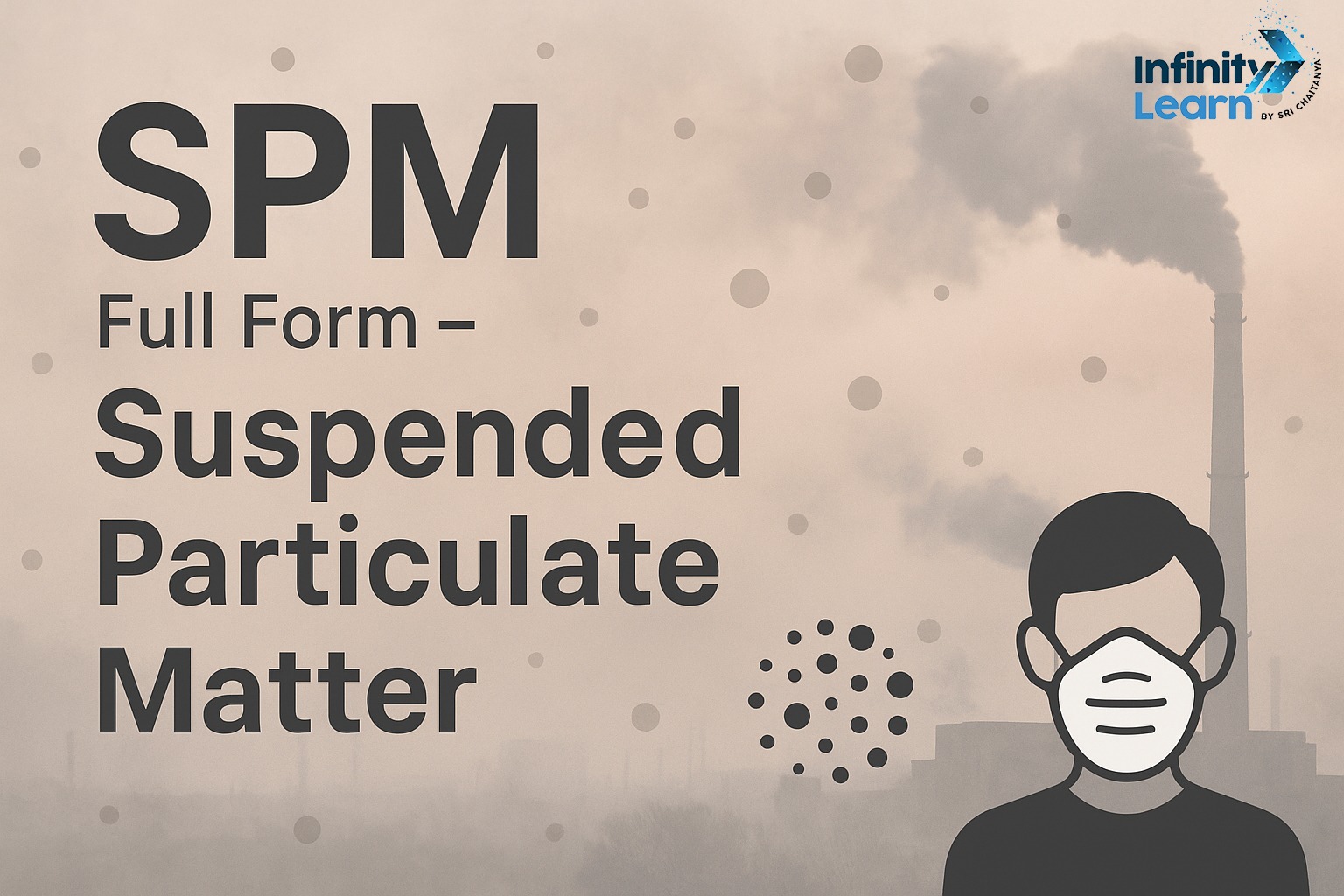
What is Suspended Particulate Matter (SPM)?


Suspended Particulate Matter (SPM) refers to tiny particles that stay suspended in the air. These particles can be either solid or liquid and come from different sources such as industrial smoke, vehicle exhaust, construction dust, agricultural activities, and natural sources like dust storms and pollen. SPM is a key indicator of air pollution, and high levels of SPM can be harmful to human health.
Do Check: ACC Full Form
What is Particulate Matter (PM)?
Particulate Matter (PM) is a type of air pollutant made up of very small particles that float in the air. These PM particles can be inhaled into the lungs and may cause health problems like breathing issues and heart diseases.PM is divided into different categories based on particle size:
- PM10 refers to particles that are 10 micrometers or smaller in diameter.
- PM2.5 refers to particles that are 2.5 micrometers or smaller, which are even more dangerous because they can reach deeper parts of the lungs and enter the bloodstream.


What is the Difference Between SPM and PM?
SPM includes all types of particulate matter that remain suspended in the air. It can be of various sizes and sources. On the other hand, PM refers to particulate matter divided by size, like PM10 and PM2.5.While SPM measures the total amount of floating particles in the air, PM10 and PM2.5 focus on fine and very fine particles that can affect human health more seriously.
Types of Suspended Particulate Matter (SPM)
There are different types of Suspended Particulate Matter (SPM) found in the air. These SPM particles come from natural and man-made sources and can affect both air quality and human health.
Dust Particles
Dust is one of the most common types of Suspended Particulate Matter (SPM). It consists of small, dry particles that stay suspended in the air. Dust particles are produced from construction activities, agricultural fields, roads, and natural processes like wind erosion. High dust levels can cause breathing problems and poor air quality, especially in urban and rural areas.
Smoke Particles
Smoke is a harmful type of SPM pollution that comes from the burning of fossil fuels like coal, wood, diesel, and oil. Smoke particles are dangerous because they contain toxic gases and fine particles that can enter human lungs and lead to asthma, bronchitis, and other respiratory diseases.
Do Check: ABG Full Form
Pollen Particles
Pollen is a biological type of SPM released by plants, flowers, and trees during certain seasons. Pollen particles are carried by the wind and can be inhaled easily. For some people, pollen SPM causes seasonal allergies, sneezing, eye irritation, and breathing issues.
Chemical Particulate Matter
Chemical SPM particles are produced by industries, factories, and vehicles. These particles contain harmful chemicals like lead, sulphur dioxide (SO₂), and nitrogen oxides (NOx). Breathing in chemical SPM can cause serious health problems such as lung infections, heart diseases, and long-term respiratory issues.
Salt Particles
Salt particles are a natural type of SPM commonly found in coastal areas and regions near oceans or seas. These salt-based particulate matters are formed when sea spray evaporates and leaves behind salt dust. High salt SPM levels can cause air pollution near coastal regions and may trigger respiratory discomfort, especially in asthmatic individuals.
When Did SPM Monitoring Start?
SPM monitoring in India became a priority after the 1980s when air pollution problems increased in cities and industrial zones. The Central Pollution Control Board (CPCB) began measuring SPM levels regularly under the National Air Quality Monitoring Programme (NAMP).


Who Introduced SPM Monitoring?
SPM monitoring was introduced by the Government of India, especially through the Central Pollution Control Board (CPCB) and State Pollution Control Boards (SPCBs). It helps in tracking air quality, reducing pollution, and creating clean air policies.
Do Check: AICTE Full Form
SPM Control and Monitoring
| Year | Milestone |
| 1980s | SPM monitoring started under national programs. |
| 1994 | SPM is included in National Ambient Air Quality Standards (NAAQS). |
| 2014 | PM2.5 included in pollution tracking systems. |
| 2019 | National Clean Air Programme (NCAP) launched, targeting SPM reduction. |
| 2020 onwards | Use of real-time AQI dashboards and online SPM tracking apps increased. |
Why is SPM Important?
SPM is important because it directly affects human health and air quality. High SPM levels cause respiratory diseases, heart problems, and can even lead to premature death.
- Major air quality indicator used by pollution control boards.
- Impacts plants, animals, and climate balance.
- Reduces visibility, causing smog and haze in cities.
- Contributes to climate change by increasing black carbon levels.
In simple words, SPM (Suspended Particulate Matter) means tiny harmful dust and smoke particles in the air. High SPM levels cause air pollution, health problems, and environmental damage.Monitoring and controlling SPM levels is necessary for a cleaner environment, healthy living, and achieving good air quality. Governments use SPM data to run pollution control programs and alert people during high pollution days.
Also Check: ENT Full Form
FAQs on SPM Full Form
What is the Full Form of SPM?
The full form of SPM is Suspended Particulate Matter. It refers to small harmful particles in the air that cause pollution and health risks.
Why is SPM Harmful to Humans?
SPM pollution is harmful because it can enter the human lungs, causing breathing problems, asthma, and heart diseases. Fine particles like PM2.5 can also affect the bloodstream.
How is SPM Measured in Air Quality?
SPM is measured in micrograms per cubic meter (µg/m³) using air quality monitoring stations. SPM levels help calculate the Air Quality Index (AQI) and determine if the air is safe to breathe.